Mother & the Balcony Darshan


April 24, 1920 has a special place in the hearts of every devotee of Sri Aurobindo and the Mother. It was this day that the Mother (originally known as Mirra Alfassa) arrived in Pondicherry, India to spend the rest of her life here.


The above is the photo & the video of the Mother. She can be seen giving darshan to her devotees. When the Mother was alive, she used to give darshan in the mornings from her balcony, which faced the Rue Saint Gilles situated in the Ashram building. When Mother was giving Darshan from the balcony, She was doing a spiritual feat everyday. She took a look at each member assembled on the road, gathered their aspirations into Her, and offered them all to the Lord. Then She turned Her face upwards.


How the balcony darshan started...
The origin of this Balcony Darshan was the obstinacy of Sri Aurobindo’s cook. Sri Aurobindo’s kitchen was across the road from the balcony. One day when there was some delay or difficulty about cooking, Mother appeared on the balcony and moved things with the cook. The next day the cook insisted on Mother appearing on the balcony for her to start cooking. Sadhaks gathered under the balcony to have a Darshan of the Mother. The Balcony Darshan came to stay.


The Mother had come to meet Sri Aurobindo in 1914. But, after staying here for 11 months, she had to return to France due to the First World War. She lived in France and Japan for about five years and returned to Pondicherry.


The Mother's Darshan clips. This video above has been superposed on Her reading of the prayer "Gloire a Toi, Seigneur (Glory to Thee O Lord)." Sri Aurobindo's translation into English follows:

Glory to Thee, O Lord, who triumphest over every obstacle.

Grant that nothing in us shall be an obstacle to Thy work.

Grant that nothing may retard Thy manifestation.

Grant that Thy will may be done in all things and at every moment.

We stand here before Thee that Thy will may be fulfilled in us, in every element, in every activity of our being, from our supreme heights to the smallest cells of the body.

Grant that we may be faithful to Thee utterly and for ever.

We would be completely under Thy influence to the exclusion of every other.

Grant that we may never forget to own towards Thee a deep, an intense gratitude.

Grant that we may never squander any of the marvellous things that are Thy gifts to us at every instant.

Grant that everything in us may collaborate in Thy work and all be ready for Thy realisation.

Glory to Thee, O Lord, Supreme Master of all realisation.Give us a faith active and ardent, absolute and unshakable in Thy victory.


On 12 October 1959, the Mother wrote to a young disciple:
"Every morning at the balcony, after establishing a conscious contact with each of those who are present, I identify myself with the Supreme Lord and dissolve myself completely in Him. Then my body, completely passive, is nothing but a channel through which the Lord passes His forces freely and pours upon all His Light, His Consciousness and His Joy, according to each one's receptivity."


Consequently, this daily darshan too used to affect variously different individuals, and even the same individual on different days. Some have glimpsed in the Mother one or another of their favourite Powers and Personalities of Mahashakti.


She further explains....
"At the Balcony, for example. When I come on the Balcony I make a special concentration, you notice that I look at everybody, don't you; I look, see, pass my eyes over every one, I know all who are there, and where they are, and I give each one exactly what he needs; I see his condition and give him what is necessary. It can go fast, because otherwise I would keep you there for half an hour, but I do it, that's what I do. That's the only reason why I come out, because otherwise I carry you in my consciousness. I carry you in my consciousness always, without seeing you, I do what is necessary. But here it is a moment when I can do it by touching the physical directly, you see; otherwise it is through the mind that it acts, the mind or the vital. But here I touch the physical directly through the sight, the contact of sight; and that's what I do -- each time."

What people see around the Mother is first her aura. ..and, secondly, the forces of Light that pour out from her when she concentrates, as she always does on the roof for instance. ...People do not see it usually because it is a subtle physical and not a gross material phenomenon.'"

The sadhaks and disciples who had developed this subtle sight -and those that had the higher psychic sensitivity were able to see the aura, and even after the Mother's withdrawal from the balcony, some of the devotees are known to have stayed on for a while longer with an abstracted and self- absorbed air, perhaps seeing the Mother still, and the aura around her .

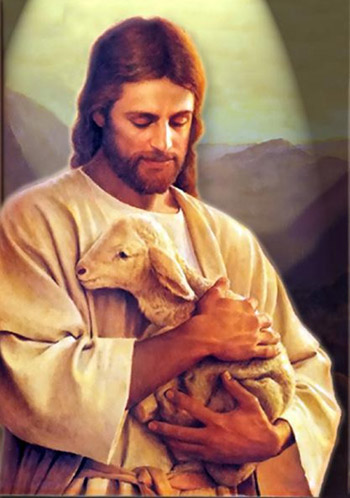


Did Jesus die in Kashmir, India (Part Two)


The theory about Jesus surviving crucifixion and coming to India is quite a thought provoking matter. It is a controversial subject. Though it is just a theory and not the gospel truth, the purpose of this writings are just to uncover some reasons leading to people believing that Jesus actually came to India & died in Kashmir. Truth, myth or fallacy is up to the reader's own discernment. They are not my own views. Just the findings of some people who are involved in the pursuit of their own truth who are trying to put the history to acid test & to verify it's authencity .

In the following dialogue you are about to see took place on the 11th July 2003 between BBC Four & Richard Denton. The dialogue explores whether Jesus survived crucifixion and where he would have gone if he survived along with the reasons given to such belief.

THE BBC INTERVIEW (July 2003)
BBC Four: Your central question is did Jesus die on the cross rather than did Jesus die at all.
Richard Denton: It is really. I originally wanted to call it The Body of Christ because that seems to me to be the crucial question. Obviously he died at some point, but when and how is the question.

BBC Four: How do you think he might have survived crucifixion?
RD: Crucifixion took up to three days; the maximum he was on the cross for was nine hours, it might even have been six. And even if you read the gospels Pontius Pilate is clearly surprised that he's already dead and wants to be reassured by the centurion that he really is dead. My personal take on it would be that he goes into a shock induced coma, and probably they thought he was dead.

BBC Four: If he did survive why do you think it's not related in that way in the gospels?
RD: First of all, they would think it was a miraculous resurrection. You don't have to think of that as a conspiracy theory or a lie, it's just a mistake. What you then have to do is get him out of the way. The real question doesn't hang over the resurrection, which I think is explicable. The real question hangs over him ascending into heaven.

BBC Four: You make the point that the Ascension isn't actually mentioned in the gospels.
RD: It's not in any of the original versions of the gospels which is astonishing. It was in the last 16 verses of Mark, which were put in 300 years after and it's inserted, in a sentence, into some versions of Luke because he was assumed to have written the Acts and it's mentioned in the Acts of the Apostles. That I think is the lie, the cover story to get him out of the country.

BBC Four: If Jesus was revived in this way where then did he go?
RD: One story is that he gets out and goes to the South of France with Mary Magdalene, there is a certain amount of evidence that she went there. And the other is that he goes to India and there are a number of versions of this. One of which suggests that in fact he had already been to India during the missing years between 12 and 29.

BBC Four: It was very interesting the parallel between the story of the three kings and the search for a reincarnated Lama…
RD: Absolutely, we explore that and the similarities between the miracles and the teachings of the Buddha and Jesus in the programme. And of course Buddha pre-dates Jesus by about 500 years, so it's not unreasonable that he may have gone to India, learned Buddhist teaching and brought it back. Then when he returns to India after the crucifixion he carries on the ministry in Kashmir until he dies at the age of 80.

BBC Four: What actually prompted you to start exploring this topic?
RD: I was intrigued because most academic theologians and intelligent churchmen, or a very significant number of them, do not believe that the resurrection is the literal truth. It's a metaphor to tell us that there is hope. Whilst not saying that it's a literal truth they don't actually say it's a lie, but if you're saying something's not literal truth then you are saying it's a lie. I was shocked that none of the people we interviewed, with the exception of the Cannon of Westminster, believed it was true. Yet if they don't think it's true what on earth do they think is the motivation behind writing the story in the Bible?

BBC Four: You say that the resurrection and the literal truth of the Gospel have in the past been the cornerstone of Christianity.
RD: Exactly. And the idea that you can go on preaching this to the ordinary faithful while not believing it yourself seemed to me truly offensive. So what I was looking for was another version of the story that had the possibility of being historically true, that could have been misinterpreted by the people at the time, so that what they said was not a lie, it was the way they understood it.

BBC Four: And in the end have you found that the most credible account?
RD: Yes, I think so. On the other hand I am a person who does not find the idea of rising from the dead and ascending into heaven credible. I'm faced with the choice, do I believe that the gospel writers were cunning liars or do I think they were simple men who misunderstood things and were amazed by this man.

BBC Four: And did these feet in ancient times walk upon England's mountains green?
RD: I personally don't think they did walk upon England's mountains green, I think they walked upon Kashmir's mountains green. They may have walked in France for all I know.


The BBC Documentary Part 1: Jesus in Kashmir, India.


The BBC Documentary Part 2: Jesus in Kashmir, India.


The BBC Documentary Part 3: Jesus in Kashmir, India.


What assumption can one make based on these so called "clues" of Jesus surviving crucifixion, travelling to India & dying in Kashmir? Are these hard enough to be called as evidence or is it just mere rubbish made by people out there to confuse the followers of Christianity? If it is true that this is the motive of unscrupulous people out there to wreak havoc in the history of Christianity, I don't see how it has succeeded so far. Perhaps, an archeologist could shed some light & verify the authencity of these claims?


Did Jesus die in Kashmir, India? (Part 1)

The theory about Jesus surviving crucifixion and coming to India is quite a thought provoking matter. It is a controversial subject. Though it is just a theory and not the gospel truth, the purpose of this writings are just to uncover some reasons leading to people believing that Jesus actually came to India & died in Kashmir. Truth, myth or fallacy is up to the reader's own discernment. They are not my own views. Just the findings of some people who are involved in the pursuit of their own truth who are trying to put the history to acid test & to verify it's authencity .

First, we have a Russian scholar, Nicolas Notovich who suggested this in his book titled "The Unknown Life of Jesus Christ". Secondly, we have Holgar Kersten's, a German scholar who came out with his 2 best-sellers titiled, "Jesus Lived in India" and "The Jesus Conspiracy" which dwells on Jesus's life beyond Central Asia.

Next, we have Subhrajit Mitra, a scriptwriter-director for National Geographic and Discovery Channel, who has been largely influenced by the above German scholar's (Holgar Kersten) best sellers. Subhrajit has been so influenced, that he decided to do a documentary film entitled "The Unknown Story of the Messiah" which actually lives off the popular alternative theory that Jesus actually had travelled to India after crucifixion, along with Mother Mary, studied Hinduism and Buddhism, and died in Kashmir where he was entombed.

(Subhrajit has sourced references from the Bhavishya Mahapurana, which records an encounter between King Shalivahana and Jesus near Srinagar, long after crucifixion.)

Meanwhile, in Kashmir, a monument hails that is religious in nature. The locals call it "The the tomb of Jesus." The precise location of this "Jesus" tomb is in the Khanyar district of Srinagar, which is the capital of Kashmir. The tomb is called the Rozabal, which means the prophet's tomb, and Jesus' name is given as Yuza Asaf. The following images were taken December 2006 provided by an individual who visited the tomb and was able to take these photos. (Photography is generally prohibited in and around the tomb).


(The tomb above purports to be the tomb of Jesus and the claim is that he didn't die on the cross, but after his wounds healed he traveled to Kashmir, where he married, had children, and died of old age.)

Video: The Tomb of Jesus in Kashmir, India. (BBC research documentary)


The fourth is a 100 paged book titled "Jesus Died In Kashmir" by Andreas Faber-Kaiser, and it was published in London in 1978. The first chapter gives an account of Jesus' boyhood trip: he is supposed to have gone to Kashmir at the age of 13 to study Buddhism. His gospel of love pleased the Buddhists, but the Hindus saw it as a challenge to the caste system and the power of the brahmins. Jesus moved to Persia, but the Zoroastrian priests also saw him as a threat and escorted him out of their city. At that point Jesus returned to Israel. This story came to the author through an Indian scholar who, during a stay in a Russian monastery, found a diary written in the last century by two missionaries. The diary was written in German, which unfortunately the Indian was unable to read, but he noticed on one page the names "Nicholai Notovich"(the Russian scholar, the 1st "evidence") and "San Issa" so he photographed the facing pages and had them translated when he returned home.

According to these pages, Nicholai Notovich was travelling in the northern part of Kashmir, which is known as little Tibet, and there in a lamasery, in exchange for an alarm clock and a thermometer, was told the story of "Issa, a son of Israel" who visited the lamasery about 2000 years ago. Issa (or Isa or Yuza, as we will see later) is a version of the name Jesus, just as Jesus is the Anglicized version of a name that is something like Yeshua, or Joshua.

The second chapter of the book sustains that an examination of the Turin Shroud proves that Jesus was still alive when he was taken from the cross. The contention is that if he died on the cross that "all the blood would have coagulated in the lower parts of his body" and that he would not have bled when wrapped in the shroud.
The third chapter says that the ten lost tribes of Israel are to be found among the Afgans, Kashmiri, and other eastern nations. To demonstrate this, the author gives a chart showing similarities between various Hebrew words and place names in Afganistan and Kashmir.

Next, the author tells the story of Jesus' travels after the crucifixion. After the crucifixion wounds were healed, Jesus set out with his mother Mary and the apostle Thomas in search of the ten lost tribes of Israel. Mary died in Pakistan, not far from the Kashmir border. Mary's tomb is near Murree in Pakistan, about 100 miles west of Srinagar at a place known as Pindi Point. Jesus continued on to Kashmir, while Thomas moved to southern India where he died after establishing a Christian community. The tombs of all three exist and are venerated by pilgrims of various faiths.

What assumption can one make based on these so called "clues" of Jesus surviving crucifixion, travelling to India & dying in Kashmir? Are these hard enough to be called as evidence or is it just mere rubbish made by people out there to confuse the followers of Christianity? If it is true that this is the motive of unscrupulous people out there to wreak havoc in the history of Christianity, I don't see how it has succeeded so far. Perhaps, an archeologist could shed some light & verify the authencity of these claims?

Next in the Part Two, my posting continues to delve deeper in this subject with some input from BBC : Did Jesus go to India & dies in Kashmir, India? (Part 2) follows.........

Did Jesus Really die when he was crucified?

"Those who say that the Lord died first and then rose up are in error, for he rose up first and then died."—Gospel of Philip

An intriguing question. What brings such a question to this subject. The following might shed some light. Whether it is a myth, fact or fallacy is subject to the own reader's discernment. The posting today for this subject is a mere discussion on this issue.

The views that bring to this question was provided by Barbara Thiering, an Australian theologist and scholar extraordinary. For over twenty years she has been involved in research into the Dead Sea Scrolls, and the result is a new version of Christ's life, titled Jesus the Man.
This is not a book for fundamentalists but for those who have a curiosity about the actual life of Jesus and the historical and social background of the time.

Her text is the opening paragraph of Chapter Twenty-Five, “A death that failed.” Here it is: “Jesus did not die on the cross. He recovered from the effects of the poison, was helped to escape from the tomb by friends, and stayed with them until he reached Rome, where he was present in AD 64.”

The 'poison' referred to here was in the 'vinegar' that had been given to him on the cross. It was snake venom, taking a number of hours to act but which rendered him unconscious in a short time. It was 3 p.m. then, after six hours on the cross. He was thought to be dead but wasn't.

This is not conjecture, asserts Barbara Thiering, but comes from a reading of the texts of the Dead Scrolls by the pesher method. Pesher is a technique that she had to master before interpreting the Scrolls. The Hebrew word is used in the Old Testament to mean 'interpretation of dreams.' Pesher in the context of the Scrolls is like a solution to a puzzle, something like a cryptic crossword. “The clues do not look as if they make sense, but anyone who knows the
technique and has the necessary knowledge can solve the puzzle.”

Pesher apparently was known to the Greeks as well as the Jews. Allegorical meanings were often found in the Old Testament, but Thiering asserts that the Scrolls gives us for the first time, historical meanings.
The Dead Sea Scrolls, it appears, reveal many more historical facts about the life of Jesus and his followers than do the gospels. The gospels quote Jesus as saying, “To you (his inner circle) is given the mystery of the Kingdom of God, but for those outside, everything is in parables.” The insiders, those who 'have ears to hear', will understand the mystery.

The miracles and the parables, understood this way, indicate that much in the gospels, as in the Scrolls, have two levels of meaning, one for the common people, the other for the sophisticated. On the surface are found the magic and the miracles, the raising of the dead, the turning of water into wine, the feeding of the multitudes with five loaves and two fish; but on a deeper level, a more realistic historical-account is revealed of the life of Christ and the origins of Christianity.
If Jesus didn't die on the cross but recovered inside the cave where he was laid, and walked out of it, then his 'appearances' need no explanation. When Jesus 'appeared' in a 'vision' to Peter and Pail in subsequent years as recorded in the Acts of the Apostle, It was the real flesh and blood Jesus holding an audience with the ministers.
The evidence for resurrection has always bean weak; an empty tomb providing only that it was empty. But the disciples wanted to believe in the resurrection. Paul goes to the extent of saying (in the first part of Corinthians), “If Christ has not been raised, your faith is in vain.”
But in the newly-discovered gospel of Philip, says Thiering, there is a passage that denies resurrection: “Those who say that the Lord died first and then rose up are in error, for he rose up first and then died.”
Theologians and critical thinkers outside the Church have pointed out that throughout Christian history, the resurrection was not treated as central to the faith but something that developed in recent times. What is new, according to Thiering, is that we now have knowledge of a technique for reading the gospels “which shows us that the Evangelists themselves did not believe it, and which shows us what really happened.” They had a difficult task—how to meet the religious need for myth and at the same time to be truthful.

There is a detailed description in this book of a 'final journey' by ship, of Jesus, Luke, Paul and Peter. This was in June AD 60 and it took them to Crete, Malta and to Rome, where they remained. The emperor was the fanatical tyrant, Nero. When Rome was partly destroyed by fire in July AD 64, the rumour spread that Nero started it, & he immediately looked for scapegoats. The Christians were an obvious choice.

The book records: Knowing the danger he was in, Peter tried to flee from Rome. He got as far as the church near the Appian Way, now called Domine Quo Vadis. Jesus met him there and persuaded him to go back and face martyrdom. “The legend says that a visionary Jesus appeared to him, but it was the real Jesus.” Peter was crucified 'in imitation of his master', and Paul was put to death.

Tacitus, the Roman historian has recorded details of Nero's persecution: “To scotch the rumour (that he started the fire), Nero substituted as culprits, and punished with the utmost refinements of cruelty, a class of men, loathed for their vices, whom the crowd styled Christians. Christus, the founder of the name, had undergone the death penalty in the region of Tiberius, by sentence of the procurator, Pontius Pilate, and the pernicious superstition was checked for a moment, only to break out once more, not merely in Judea, the home of the disease, but in the capital itself....
“First, then, the confessed members of the sect were arrested; next on their disclosures, vast numbers were convicted, not so much on the count of arson as for hatred of the human race. And derision accompanied their end: they were covers with wild beasts' skins and torn to death by dogs; or they were fastened on crosses, and, when daylight failed, were burned to serve as lamps by night.”
There is no record of the final days of Jesus, says Thiering. He had married Mary Magdalene, fathered a family, and later divorced. He was seventy years old in AD 64, and it is probable that he died of old age in seclusion in Rome. That leaves the legend about Jesus having died in Kashmir still open to conjecture. (That will be my next topic)
Courtesy: The Deccan Herald (date unknown) under the title “Death, where is thy sting?”

Shobana & Ramalinga Swamigal

The name Shobana meaning she who is always radiant. The name was given to her by her guru Ramalinga Swami. Who is this saint called Ramalinga? Where is he from? How did she make a contact with Swami Ramalinga or was she contacted by Ramalinga? The answer to this is not an easy guess for those not familiar to Hindu traditions. A brief account of him follows. Read on...

Who is Ramalinga Swami...?
Ramalinga Swami was born on 5th October 1823 in a place called Marudur in South India. He did not get proper education during his young days. When he was 5 yrs old, his father gave him the name "Ramalingam" in the presence of the 2 presiding deities, Govindaraja & Nataraja of the Chidambaram Temple. He lived for 50 years until 1874 when he dematerialised.

The collection of his philosophical works is called "Thiru Arutpa" that consists of about 6000 verses which has been noted for it's simplicity, elegance of expression & melodious. The songs known as "Agaval" has 1 596 lines & is believed to be written by him to bring out clearly the evolution of human system and philosophy.

Saint Ramalingam preached Self-dedication and the path of Universal Harmony, Oneness of God, Non-violence and Vegetarianism. He was against the differentiation of people on the BASIS OF RELIGION or caste and the observance of rituals.

Saint Ramalingam was called "Vallalar" by his devotees. He has set up "Sanmarga Satya Sangam in 1865. In 1867, "Sanmarga Satya Dharmasalai" was set up to feed the poor.

He attained liberation on the 30th January 1874. (This means that the visitation that Shobana says she is receiving comes from a Saint that lived & passed on more than a Century ago....)

Saint Ramalinga's Unique Disposition.....
The Saint Ramalinga's was said of possessing a "golden body", a visible ray of auric golden ray surrounding him. It was the result of his spiritual conquest & determination to reach the highest heights of his spiritual mastery. Thus, the deathless life or immortality, that followed in dematerialization is the consequent of his soul's union with the Supreme and in reaching liberation from physical existence. This seems to reflect the famous Upanishadic passage that says "from the unreal to the Real, from the darkness to the Light, from death to Immortality".

Ramalingam's mysticism does not involve the loss of the body in the final state of liberation, but its transfiguration which is filled with the divine life and becoming a spiritual body which no longer conditioned by the present laws of matter, but transfigured in the divine light after he embraced the vast grace light.

SHOBANA.....
Shobana is a Spanish woman who resides in Spain & has never been to India. A very humble & simplistic thinking individual who cautions to always keep a check of one's ego when in spiritual pursuit otherwise which the journey may not take to the intended destination.

Shobana explains,"After His Dematerialization, Ramalinga took a Divine Body of Universal Presence, by which He has manifested Himself in Occident at the present time, to make more accesible to all the people the Achievement of Deathless Golden Body. At the present He directly has shown a new way, giving it the name of THE PATH OF GRACE LIGHT."

To know more of Shobana, her image & her revelations of Ramalinga, you can access to her site thru this link : http://www.ramalinga.com/english.html.


A GRAVE VISIT DURING GRAVEYARD SHIFT AT THE POLICE STATION

Cops on graveyard shift duty at Bandar Hilir police station experienced an incident that sent a chilling shock straight to their spines....